How to set up a law firm payment plan that actually collects
Your client can pay $4,500, just not this month. A payment plan turns a fee they cannot afford into one they can, and turns your firm into a lender unless the schedule runs itself.
Your client can pay $4,500. They cannot pay it in August. A payment plan is what turns a fee somebody cannot afford into one they can, and in immigration, criminal defense, and family work it is the difference between taking the case and watching it go to the firm down the street.
It also turns your firm into a lender. Someone has to notice that installment nine of fifteen did not arrive, work out whether the client is struggling or gone, and decide what happens to a case that is half paid and fully open. Firms that run plans well are not more diligent than firms that run them badly. They have set the plan up so the collecting happens without anybody remembering to do it.
Six decisions, made once.
Take a real deposit up front
The first payment should cover the work you will do before the second one arrives. A plan that starts at zero means the file is open, the deadline is running, and nothing has been paid for the work already done.
Size the installment to their month, not your fee
Fifteen payments of $300 collect where five of $900 default. Ask what they can pay monthly and build the schedule from that answer. A plan the client can actually meet is worth more than a shorter one they cannot.
Put a payment method on file
A plan that relies on a client remembering to send money each month collects at a fraction of the rate of one that charges a saved card or bank account on a date they agreed to. Get written authorization for the schedule when they sign.
Tie the schedule to the work, not the calendar
Where the fee is flat and unearned, each installment lands in trust and is earned as you complete stages. Set the stages so the money you have earned roughly tracks the money you have received, which keeps a mid-case exit from turning into an argument.
Say what happens if a payment fails
The engagement letter should state when you follow up, when you pause work, and what has to happen before you would move to withdraw. Deciding this in advance is far easier than deciding it about a specific client in month seven.
Skip the finance charge
Most firms charge no interest, which keeps the arrangement simple. Adding a finance charge can pull you into consumer credit regulation and disclosure obligations that are not worth the recovery on a $4,500 fee. If you want to charge one, ask someone who does that work.
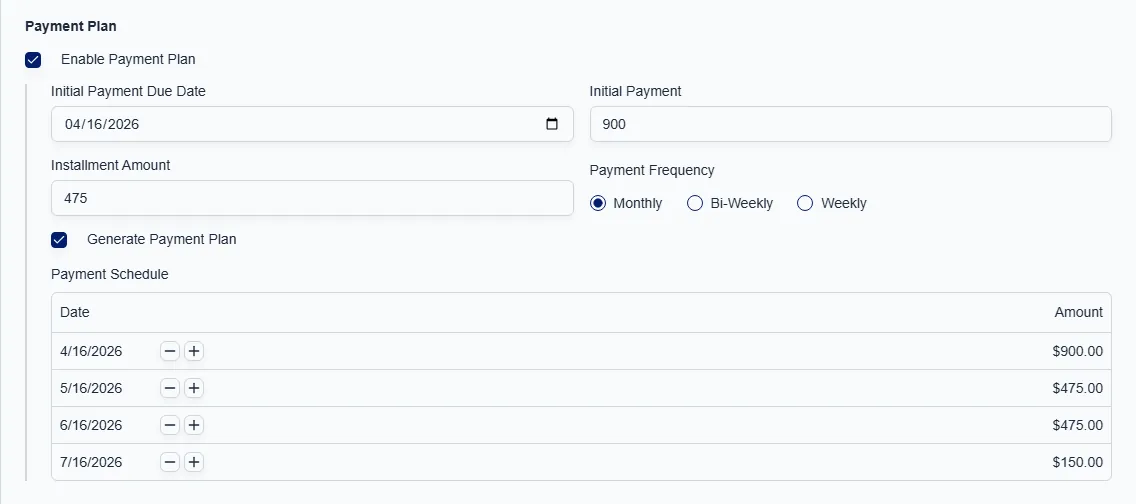
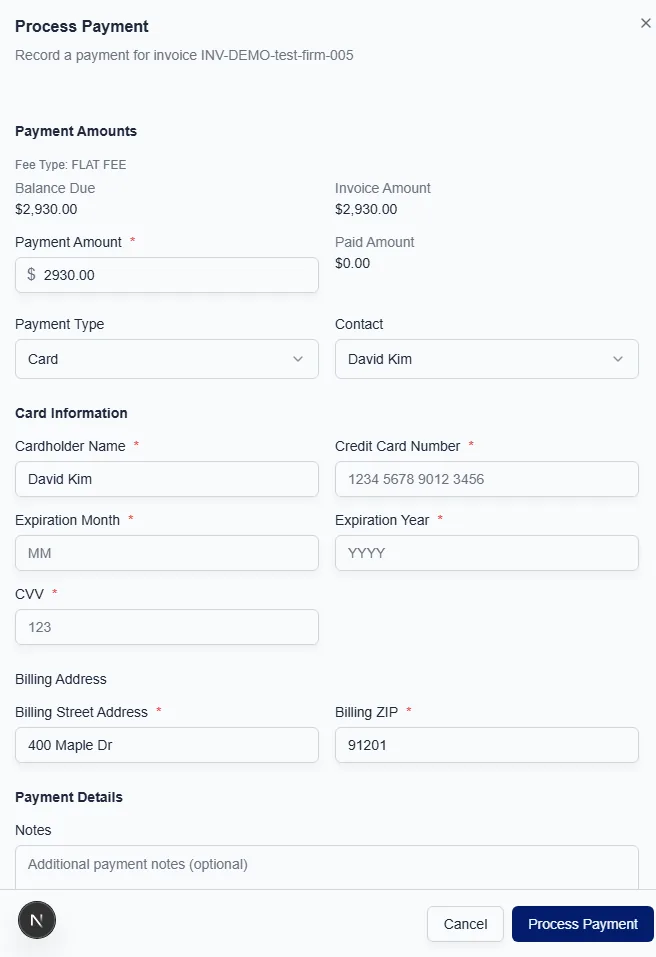
Each installment still has to reach the right account.
A payment plan does not change the character of the money. If the fee is unearned, every installment is client property when it arrives, which means it belongs in trust and moves to operating as you earn it. Firms get this wrong at exactly the point automation helps most, because a recurring charge that deposits straight to operating quietly commingles twelve times a year instead of once.
- Trust and operating routing by rule. Each charge lands in the account its character requires, rather than wherever the processor was pointed on setup day.
- Processing fees debit operating. A processor that nets its fee out of the deposit is taking it from your client. Legal-specific processing keeps the fee off the trust account.
- Retries and reminders run themselves. A declined card gets retried and the client gets told, without it becoming somebody's Friday afternoon.
Get paid on the 1st without asking anyone.
Set the schedule at intake, take the authorization with the engagement letter, and the charges run themselves into the right account for the rest of the matter. You find out about a failed payment the day it fails, not in a year-end review. All of it is in the $49 plan, with no per-matter fee no matter how many plans you run.
The plan stopped paying. Now what?
First, check it is not the card
A meaningful share of failed installments are expired cards and address mismatches rather than clients who cannot pay. An automatic retry and a message asking them to update the method resolves most of them without a conversation.
Talk before you pause
A client who has stopped paying usually knows and is avoiding you. Reaching out with a revised schedule collects more than a demand letter, and it is cheaper than the alternative for both of you.
Nonpayment is not automatic withdrawal
You may be permitted to withdraw for nonpayment, and you may not be, depending on where the matter stands and what a court or agency would allow. A pending deadline does not pause because a fee did. Check the rule and the tribunal before you stop work.
Watch the pattern, not the case
If a quarter of your plans stall at the same installment, the schedule is wrong rather than the clients. Look at where plans break and move the deposit or the installment size before you take on more of them.
Common questions about law firm payment plans.
Do payment plan installments go into trust or operating?
Can I charge a fee for setting up a payment plan?
What happens to the plan if the matter ends early?
Should I take a card or a bank debit?
How many installments is too many?
The software that does this for you.
CaseFuze handles the ledger, the statement, and the checks. $49 per user per month.