Can AI write a demand letter?
It can write a draft. Whether that draft is worth editing depends on what it could see when it wrote it, and most of a demand letter lives in your ledger rather than in a prompt.
It can write a draft. Whether that draft is worth editing depends entirely on what it could see when it wrote it. A demand letter is not a writing exercise. It is an argument built on numbers that have to be right, and most of those numbers live in your ledger, your costs, your treatment chronology and your lien file rather than in anything you would type into a chat window.
Hand a general chatbot a prompt and you get a competent template with brackets in it. Hand it the matter and you get a letter. The gap between those two outcomes is the whole subject of this page.
Six things, and only two of them are writing.
Liability, told once
What happened, in the order it happened, sourced to the report and the statements rather than to the client retelling. This part a model drafts well from the documents in the file, and it drafts it the same way every time, which is more than can be said for four different associates.
Treatment, dated
The chronology, compressed to the dates that carry the argument. If it was built from the records with page references, this section writes itself and every date in it can be defended. If it was not, you are proofreading fiction.
Specials that tie out
Billed, adjusted, paid, outstanding. These figures have to match the costs on the matter and the ledger they will later be disbursed from. A model that cannot see the ledger is guessing, and a guessed special is the mistake the adjuster leads with.
Liens, named
Health plan, Medicare or Medicaid, provider balances, letters of protection. What you disclose here shapes the negotiation and the disbursement two months later. This is your judgment, not a drafting task.
The number and the deadline
The demand itself, the basis for it, the response window and what happens when it closes. Never delegated. A model has no idea what this case is worth in this county in front of this adjuster.
What follows if it fails
The complaint. If the demand does not land, the same file should produce a pleading formatted the way the court expects it, on 28-line or 26-line pleading paper with the caption set, rather than a document somebody rebuilds from scratch in Word.
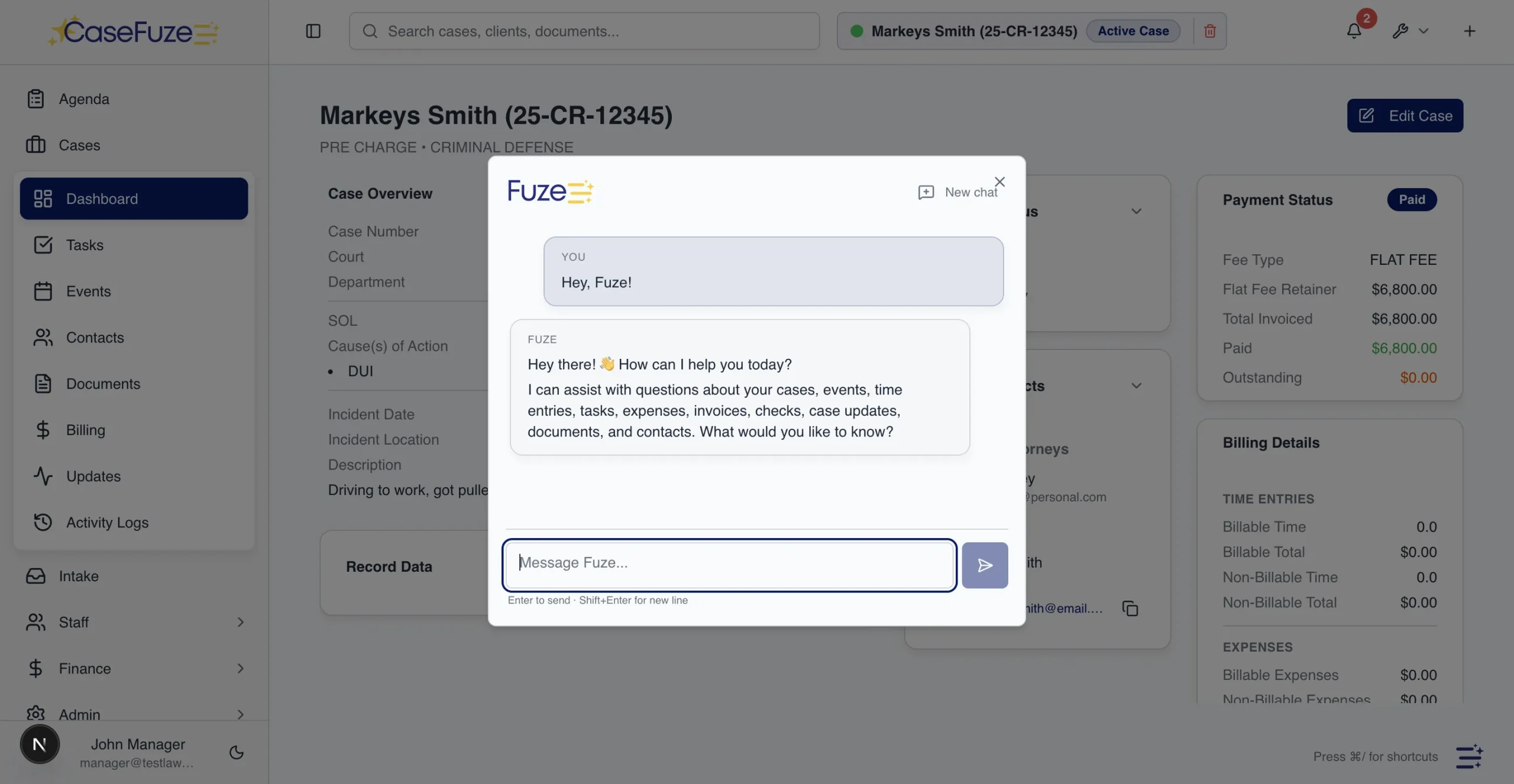
The letter is only as good as what the drafter can see.
Every weak AI demand letter fails the same way. The prose is fine and the facts are approximate, because the person prompting it summarized the case in four sentences and the model filled the rest with plausible material. CaseFuze drafts against the matter itself: the parties, the dates, the documents, the costs and the trust ledger are already in context, so the letter is assembled from your record instead of from your description of it.
- Specials come from the ledger. The same figures that will appear on the settlement statement, not a second set typed into a prompt.
- Court-ready output when it escalates. Pleading paper at 28 or 26 lines, numbered down the left margin, caption and footer set, so the complaint does not get rebuilt by hand.
- Nothing pasted, nothing retained. The records never leave for a separate chat window, and the models keep no copy of what they read.
The five-minute check that keeps you out of trouble.
Trace every number to a source
Each special to a provider ledger line, the total to your reconciled figure, the property damage to the estimate. An adjuster reads the numbers before the prose, and a figure that does not tie out costs you credibility on everything above it.
Check the dates against the chronology
Date of loss, first treatment, last treatment, date of maximum improvement. These are the four the defense will test first, and a transposed digit reads as carelessness at best.
Verify any authority it cites
If the draft cites a statute, a rule or a case, open it. Lawyers have been sanctioned for filings containing citations that did not exist, and a demand letter with a fabricated cite tells the carrier exactly how carefully the rest was prepared. If you did not need the citation, cut it.
Cut the throat-clearing
Models open with a paragraph restating the obvious and close with one summarizing what they just said. Delete both. The first line should be who you represent and what happened.
Read it as the adjuster
They are looking for a treatment gap, a prior injury, a soft causation link and an inflated special. If the draft does not address the weakness you already know is in the file, it is not finished, and no model will find that for you.
Keep the demand number yours
Venue, adjuster, carrier posture, how the client presents, what the case is worth if it tries. Nothing in the file tells a model any of that. Set the number, then let the draft carry it.
The blank page was the expensive part.
Ask for the demand and it comes back built from the matter you already have open: liability from the documents, treatment from the chronology, specials from the ledger they will actually be disbursed from. You edit and send instead of assembling. In the $49 plan, with every other feature.
Common questions about AI-drafted demands.
Will the adjuster be able to tell it was drafted by AI?
Do I have to tell the carrier I used AI?
Can it draft the response to a lowball offer?
What about policy limits demands?
Can it produce a complaint if the demand fails?
Where do the medical facts come from?
Draft it from the file, not from a prompt.
Liability, treatment and specials assembled from the matter you already have open. $49 per user per month.